**************************************************************************************
Comments from Ken Kalnins, the Pentecostal pastor of Sarah Palin’s home church.
During the 2004 election season:
"I'm not going tell you who to vote for, but if you vote for this particular person, I question your salvation. I'm sorry."
After the criticism of President Bush’s handling of Hurricane Katrina:
"I hate criticisms towards the President because it's like criticisms towards the pastor -- it's almost like, it's not going to get you anywhere, you know, except for hell. That's what it'll get you."
On 9/11 and the invasion of Iraq:
“We need to think like Jesus thinks… We need to develop as believers the instinct that we are at war, and that war is contending for your faith. ...Jesus called us to die… I believe that Jesus himself operated from that position of war mode. Everyone say 'war mode.'"
Chipping at Bricks in the Wall
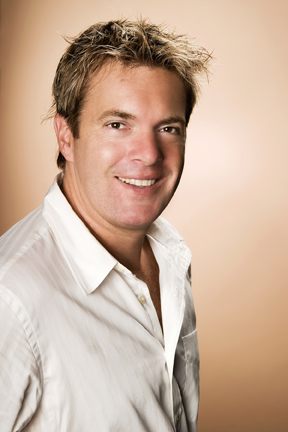 By Ian Lawton
Ears will be burning around the nation on Sunday, September 28. Jeremiah Wright’s fiery state of the nation sermons will “palin” comparison to the 36 preachers in 20 states who will endorse their preferred presidential candidate as part of a protest against IRS restrictions. It seems that they want the IRS to fine them or threaten to remove their tax exemption, so that they can test the 50-year ban on religious leaders making political endorsements in the Supreme Court.
Here we go “mccain”. It will come as no surprise that all 26 of them will most likely endorse McCain. The Alliance Defense Fund (ADF) seems less interested in freedom of the pulpit and more interested in forcing a conservative Christian agenda on the rest of the nation. Maybe Pink Floyd was right, and as they tear down the wall, their deepest fears will be exposed.
Religious liberals and religious conservatives alike have hacked bricks out of the wall that separates church and state, but for different reasons. Religious conservatives expect to see their beliefs upheld by political leaders and they assume the right to preach their morality when and where they please. Religious liberals speak out against leaders who threaten the separation of church and state by couching their policies in conservative theology.
As a religious leader and a strong believer in the separation of church and state, I find myself obligated to ask, "Does the theology of Sarah Palin compromise the separation of church and state?" Early in June, Governor Palin used state money to fly to her Pentecostal home church in Wasilla to speak to a group of ministers in training. She suggested that sending soldiers to Iraq is God’s will. Should political leaders defend policy with such religious convictions? Does anyone know God’s will? She has also suggested that a gas pipe line in Alaska is God’s will. This sort of theology is not uncommon, but problematic for a national leader. It has been used to justify crusades and holy wars throughout history. I can understand people being anxious about Palin’s belief in violent end times when her hands could be only “mcmillimeters” away from a nuclear button. Sarah Palin is entitled to any personal beliefs that make sense to her. It is, however, problematic to have a leader in a democracy making world changing decisions as a result of such speculative personal beliefs.
Just when religious liberals, who have been “biden” their time, think they have finally survived 8 years of theocratic leadership, they have a right to question another religious conservative in office. The separation of church and state could be under threat.
Religion must move towards values more than beliefs if it is to remain viable in a pluralistic world. We should spend less time pontificating and arguing about beliefs that cannot be known with certainty, and more time focusing on values that whole communities can share, like justice and compassion, wellness and sustainability.
The separation of church and state is a wall intended more to keep religion out of politics, than politics out of religion. The 36 ADF preachers are partially right. The boundary between speaking about issues and endorsing candidates is fuzzy. Religion’s primary concerns are morality, values and issues. Furthermore, there is no IRS ban on criticizing politicians already in office or critiquing policies of candidates. Many fine lines run across the wall of separation.
The wall is primarily to keep the state from sanctioning one branch of belief over another, and it is to stop leaders from discriminating against those who believe differently. In short, it is to protect freedom of speech by curtailing freedom of certain other speeches.
Tipppytoeing along the wall is a balancing act for religious leaders and politicians alike. Last week I was asked to offer the opening prayer at a city council meeting. It left me with a crisis of conscience. I was inclined to decline the offer because opening city council meetings with Christian prayers contravenes the separation of church and state, as well as offending those in attendance who aren’t Christian. On the other hand, I didn’t want to simply close the door to dialogue. So I chose instead to craft a prayer to include, rather than exclude, a diverse community. This is the prayer I offered. You be the judge as to whether I fell off the wall or not.
Prayer to Open Council Meeting
God of limitless compassion and inclusive love, God beyond names,
God before whom our creeds and petty differences fade into irrelevance- be here, be now.
Division and fear dissolve in love’s unconditional embrace
Discord melts in the presence of divine love, softening the hardest heart and warming the coldest despair
May we be servants of love, servants of all. May the plans, conversations and decisions of this council be offered for the common good. Let the welfare of this community be our prayer tonight.
We are the ones we’ve been waiting for. The time is now. Let us serve the community with urgency.
The time of the lone wolf is over. Let us gather together and work for peace and justice.
History teaches us that the rights and accomplishments of humanity are the results of its past struggles, and that the road less traveled is many times the highest path to human progress. We therefore invoke this council and all leaders to be guided and inspired by the invaluable lessons of history, the honest insights of science, the guileless wisdom of logic, and the heart and soul of our shared humanity - compassion and tolerance.
So rather than clasping your hands, bowing your heads and closing your eyes, let your prayer be your eyes that remain open to the challenges before you. Let your prayer be your hands that work in diligent service of that which truly makes us strong - our diversity.
God of love- be here. Be now.
May it be so, now and forever. Amen.
What Can We Agree On?
Whatever your political preference, however you understand the separation of church and state, no matter what happens in November, and regardless of your feelings about 9/11 commemorations, surely we can agree at least on this. All people have a right to pursue their own thoughts, beliefs and values. All people have a right to life, liberty and the pursuit of happiness. Politicians must serve the good of the whole, a diverse citizenry. The heart and soul of our shared humanity is not found in specific beliefs such as creationism, end times theology or God’s will for war and oil, but is found in shared values of limitless compassion and boundless tolerance.
Learn more about Ian Lawton by reading his bio here


No comments:
Post a Comment